
Prime Minister Narendra Modi and Russian President Vladimir Putin held extensive discussions to strengthen bilateral trade, defence, and energy cooperation, while also addressing the ongoing Ukraine conflict and exploring avenues for peace and resolution, with Modi reiterating India's call for dialogue and diplomacy.
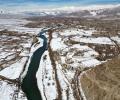
China and Pakistan concluded their strategic dialogue, reiterating their opposition to unilateral actions in South Asia and discussing Kashmir, Afghanistan, and trilateral cooperation.

Japan is deepening its defence relationship with India while simultaneously expanding its economic, infrastructure and security engagement with countries around India -- particularly Bangladesh. The result is an emerging Japanese conception of South Asia in which India remains the strategic anchor, but the geography surrounding India is becoming increasingly important, points out Varun Arya.

Their message is blunt: Public scientific wealth should not be transferred at what they describe as 'throwaway prices'.capability, recruitment, promotional avenues and the voice of its employees.

United States Secretary of State John Kerry, heading a high-powered delegation of his cabinet colleagues and top military commanders, today left for India as part of his 10-day seven nation Asia trip.

Prime Minister Narendra Modi, addressing the SCO summit in Bishkek, called for a united front against terrorism and its financing, rejecting double standards. He emphasised resolving conflicts through dialogue and diplomacy, not battlefields. Modi also highlighted that connectivity projects must respect national sovereignty and territorial integrity, a veiled reference to China's Belt and Road Initiative. India's vision for SCO rests on security, connectivity, and opportunity.

India on Tuesday conveyed to China the importance of maintaining peace and tranquility along the Line of Actual Control (LAC) for overall bilateral ties as national security advisor Ajit Doval held talks with Chinese Foreign Minister Wang Yi focusing on delimitation of the frontier and sustaining work on trans-boundary cooperation.

Prime Minister Narendra Modi addressed his Japanese counterpart Sanae Takaichi as his 'younger sister' and hailed her as a 'visionary and popular leader' during a joint press meet, where both leaders unveiled initiatives to deepen bilateral cooperation and strengthen the India-Japan Special Strategic and Global Partnership.

Former CDS Anil Chauhan stated that China poses a long-term and comprehensive challenge to India, with the boundary issue remaining unresolved due to differing perceptions of the Line of Actual Control. However, he emphasised that India's ties with Beijing cannot be solely defined by border disputes, advocating for engagement through platforms like SCO and BRICS. He also highlighted the broader global geopolitical flux and instability in India's neighbourhood as significant security concerns, stressing the need for self-reliance.

Prime Minister Narendra Modi is scheduled to visit Israel for two days to discuss bilateral and regional issues, marking his second visit to the Jewish state and highlighting the growing strategic partnership between India and Israel.

'The Chinese military cannot advance much in Ladakh, even if they want to.' 'Similarly, in Arunachal Pradesh, they can rename a village or two, intrude here or there, but cannot do much more realistically.'

Prime Minister Narendra Modi urged Russian President Vladimir Putin to move from 'endless war to the end of war' in Ukraine, emphasising that a peaceful resolution is humanity's shared priority.

India has highlighted 13 key outcomes from the recent Shanghai Cooperation Organisation (SCO) summit, focusing on enhanced cooperation in security, counter-terrorism, and addressing transnational threats. These outcomes include the establishment of a Universal Centre for Countering Challenges and Threats to Security, a strong stance against state-sponsored terrorism, and agreements on narcotics control, climate change, and artificial intelligence, reinforcing India's engagement in the Eurasian region.

Onestruction Inc and DataKaveri Systems have signed an MoU to establish a framework for strategic and technical collaboration in urban and built environment data exchange.

The Indian Olympic Association (IOA) CEO Raghuram Iyer announced that India will send 125-130 athletes to the Glasgow Commonwealth Games, participating in eight able-bodied and four para sports. The IOA is also preparing for the Asian Games and is in talks with the IOC for India's 2036 Olympic bid in Ahmedabad, which is also set to host the 2030 CWG. Iyer clarified that the IOA will not interfere in athlete selection matters.

Former US President Donald Trump has issued a stern warning to Iran, stating that "nothing will get through" unless a deal or "total surrender" is achieved, amid escalating tensions and conflicting reports on direct negotiations.
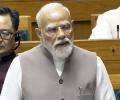
Prime Minister Narendra Modi addressed Parliament on the West Asia crisis, advocating for dialogue and diplomacy, ensuring the safety of Indians in the region, and addressing concerns about fuel and food security.

Prime Minister Narendra Modi and Indonesian President Prabowo Subianto have significantly advanced the India-Indonesia Comprehensive Strategic Partnership, securing crucial agreements on defence, critical minerals, and maritime security, including BrahMos missile supply and Sabang port development.
Union Health Secretary Punya Salila Srivastava highlighted the strong health cooperation within BRICS, emphasising the critical role of digital health and artificial intelligence in ensuring continuity of care. Speaking at the 16th BRICS Health Ministers' meeting, she noted shared challenges among member nations and showcased India's advancements in digital health infrastructure and AI strategy.
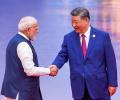
India's dual pursuit of a robust strategic partnership with Washington and a pragmatic, tension-management policy with Beijing represents the essence of modern multi-alignment. By embracing economic pragmatism, learning to compartmentalize political differences, and engaging in continuous dialogue, India can secure its borders, grow its economy, and contribute to a stable, multipolar Asian century, points out Ambassador Rajasekhar.

Chinese Foreign Minister Wang Yi met with National Security Advisor Ajit Doval in New Delhi, stressing the importance of respecting each other's "core interests" and implementing leaders' consensus for stable bilateral relations. Wang highlighted that India and China should view each other as partners, not rivals, and properly handle sensitive issues like the border dispute to foster cooperation and accelerate the modernisation of the Global South.

C Joseph Vijay's Jana Nayagan is not just a film but a potent political statement, strategically crafted to align with his political aspirations and claim the legacy of M G Ramachandran, notes Saisuresh Sivaswamy.

Switzerland will host the next global AI summit in June 2027 in Geneva, aiming to establish stable processes for AI governance and promote its responsible use. Building on previous summits, including one in New Delhi, the event will focus on AI as a driver of prosperity and human-centred innovation, bringing together governments, organisations, and civil society to address global challenges.

"I was thinking I would not be required to sit on a protest. I am sad I have to sit on a fast again. I am not doing it happily; it is not easy either. I may even die, but even if I die, I will not step back," said Sonam Wangchuk, climate activist and educator, regarding his indefinite fast for Ladakh's constitutional safeguards.

India and Israel have elevated their relationship to a special strategic partnership, focusing on enhanced cooperation in trade, technology, and defense, while also addressing regional peace initiatives.

Notwithstanding the economic complementarities and the host of agreements for deepening economic relation on a host of areas, both sides share common viewpoints on the foreign policy domain and seek common grounds to serve as a counterweight to China, notes Dr Rajaram Panda.

US President Donald Trump lauded Prime Minister Narendra Modi's 'calm, cool, killer' persona at the G7 leaders' lunch in France, underscoring the deeply strategic relationship and formidable diplomatic skills of the Indian leader ahead of their crucial bilateral meeting.

Underlining that students are the "architects of India's future," President Droupadi Murmu on Friday said the government is taking comprehensive steps to reform public examinations to completely curb paper leaks and unfair means, making the system transparent, secure, and trustworthy.

India and France have elevated their relationship to a 'special global strategic partnership,' with increased cooperation in defense, trade, and technology. The leaders also inaugurated a helicopter assembly line in Karnataka.

India and Australia have signed significant agreements covering civil nuclear energy, maritime security, and critical minerals, reinforcing their partnership's role in ensuring a peaceful Indo-Pacific. The pacts facilitate uranium supply from Australia to India and enhance cooperation in defence, cyber, and critical technologies.

India and Japan will hold the fourth strategic dialogue on Saturday when Japanese Foreign Minister Katsuya Okada arrives in New Delhi, during which the two sides will discuss a wide gamut of issues, including civil nuclear cooperation and ways to enhance bilateral trade ties.

US Secretary of War Pete Hegseth praised India's military modernisation efforts at the Shangri-La Dialogue in Singapore, highlighting its growing industrial and logistics capacity.

US President Donald Trump has lauded India as an 'essential partner' and 'trusted ally' in addressing regional challenges, particularly its 'big role' in West Asia peace efforts, following discussions with Prime Minister Narendra Modi at the G7 Summit.

Amidst rising Middle East tensions, External Affairs Minister S Jaishankar highlights India's strategic dialogue with Iran to safeguard maritime traffic through the Strait of Hormuz, ensuring India's energy security and continued oil trade.
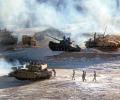
While tensions have eased at several friction points and mechanisms for managing the boundary have been reactivated, underlying differences persist. Disputes over naming practices in Arunachal Pradesh, continued infrastructure development on both sides, and unresolved questions regarding patrolling rights indicate that the structural gap remains, notes Dr Kumar.

Modi's comments on underlining the importance of ensuring the safety of seafarers came against the backdrop of growing anger in India over the killing of the three Indian crew members in a US military attack on a merchant ship off the coast of Oman last week.

US President Donald Trump claimed on Tuesday that Tehran has consented to long-term, comprehensive monitoring of its nuclear infrastructure. Concurrently, Washington will ease shipping constraints in the Strait of Hormuz and release bound financial concessions, subject to stringent American oversight.

A new report suggests China's maritime vulnerability lies in the Strait of Hormuz, not Malacca, creating strategic competition in the Indian Ocean.

Prime Minister Narendra Modi on Sunday used two major public engagements in Kolkata to outline a broader vision for India's future -- one rooted in inner balance and collective well-being through yoga, and the other in national self-reliance and maritime strength.

Prime Minister Narendra Modi and US Secretary of State Marco Rubio discussed various aspects of India-US bilateral ties, focusing on defence, trade, energy, and technology. Rubio extended an invitation from President Donald Trump for PM Modi to visit the US.
